
At 63 Her Scalp Itched for Days After Every Color, Then Her Granddaughter Said What No One Would
Why a retired school librarian stopped putting strong color on her scalp every few weeks, and how she still kept the hair color she had worn all her life
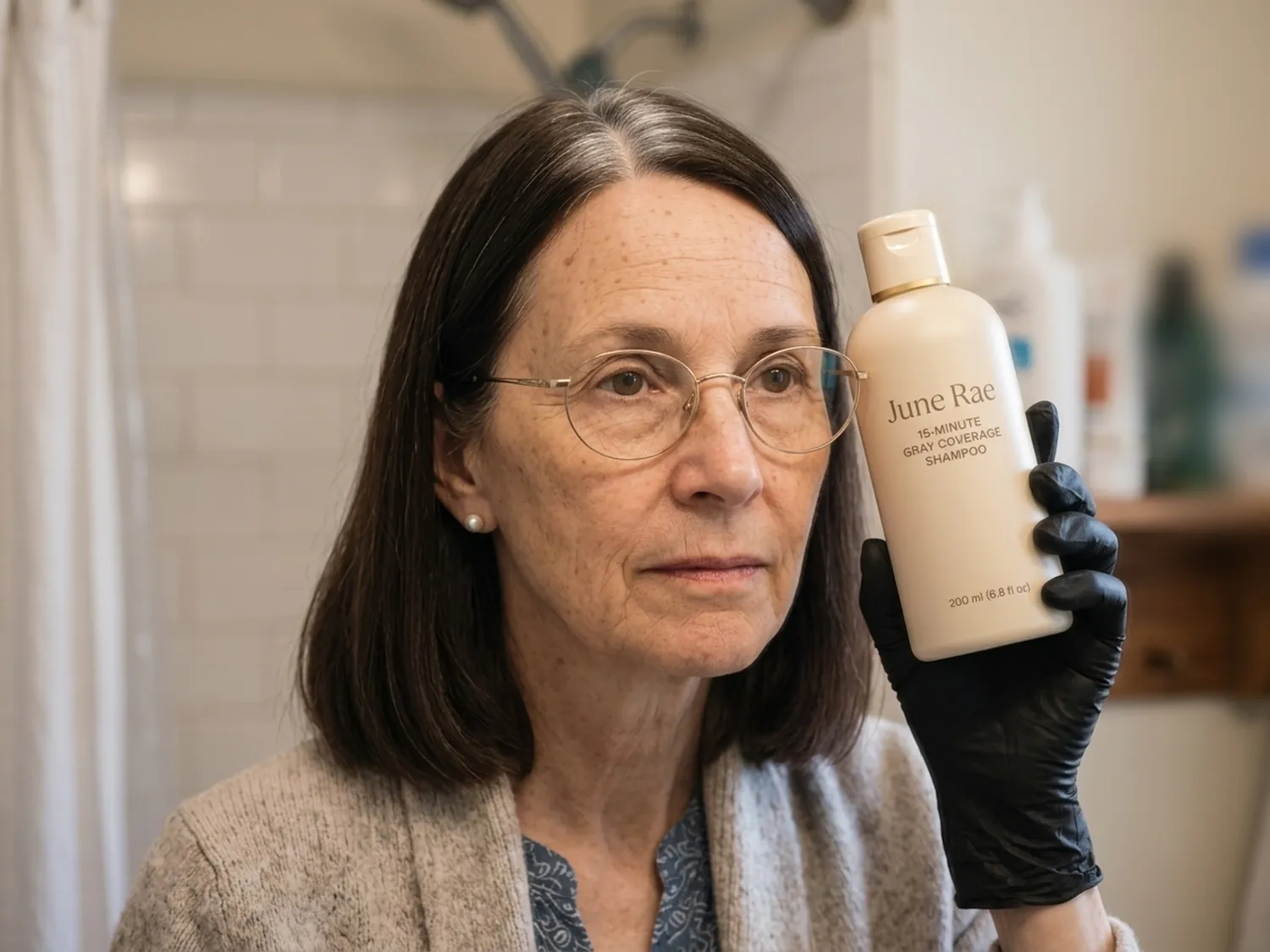
"Grandma, your hair has a white road in it." My granddaughter, age seven, in front of our hallway mirror, a Sunday at five o'clock
If Your Scalp Tingles After Color
If your scalp tingles after a touch-up and you have decided that is just the price of not looking your age…
If you have ever lain awake the night after the salon, trying not to scratch so you would not ruin the color you just paid for…
If your hair has started to feel like straw in your hands, and you blame the years instead of the routine…
If you have stood at the mirror and said, quietly, "Maybe I should just stop", and hated the sound of it…
Then please read this before your next appointment. It is long, because it took me a long time to work out. By the end you will know what the June Rae shampoo is, and why I almost did not try it.
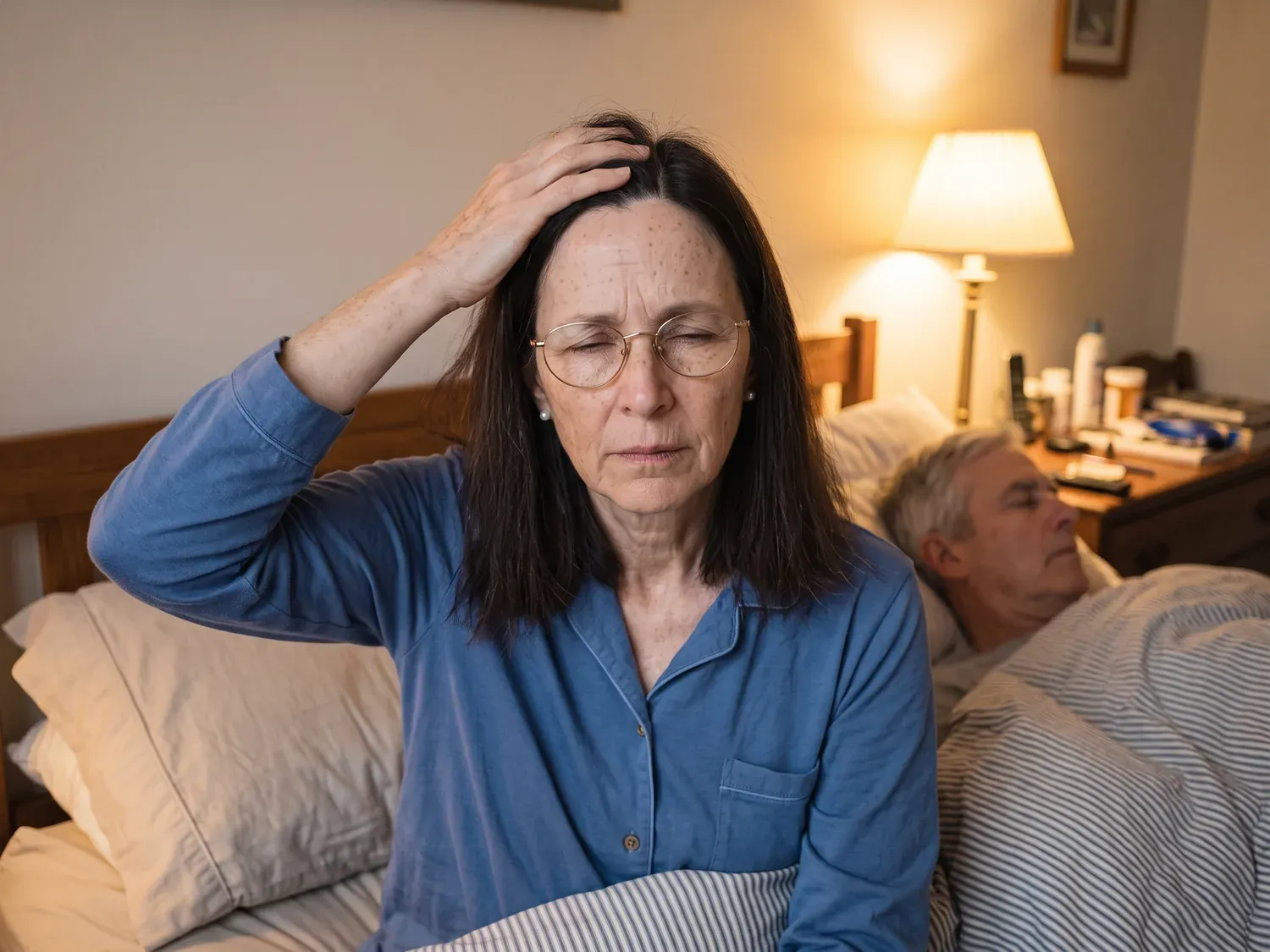
My name is Margaret Doyle. Everyone has called me Peggy since kindergarten. I am 63, and I was a school librarian in Harrisburg, Pennsylvania, for most of my working life.
I have colored my hair for thirty-four years. Dark brown, the brown I was born with. I started when the first gray came in at my temples, the year my son turned four.
And for the last six of those years, my scalp itched for three days after every touch-up. I told no one. Not my husband, Frank. Not my daughter. Not even the woman who did my color.
Three Nights of Scratching, Every Time
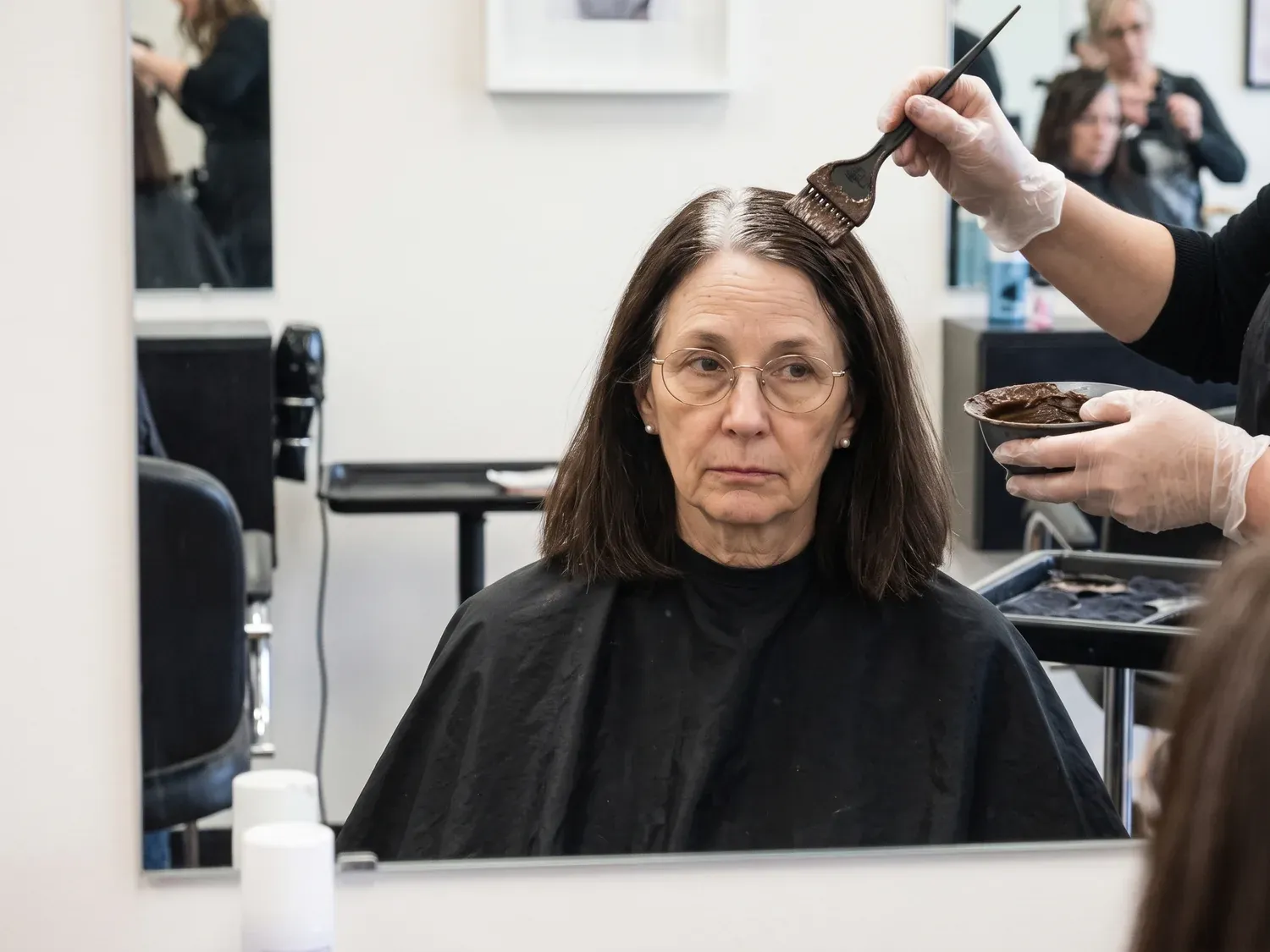
My touch-ups were on Thursdays. Thursday morning, the cape, the bowl, the brush, the smell that gets into your sweater.
By Thursday night it would start. A prickle along my part, then a heat behind my ears, then an itch I could not reach without digging.
Friday was the worst. Saturday was better. By Sunday it was gone, and I would forget until the next appointment.
My husband once caught me at two in the morning with a cold washcloth on my head. "Peg, what on earth?" I told him it was a headache. I lied because I was embarrassed.
Embarrassed of what? I think I believed it was my own fault. That this was what happened to women my age who would not let go.
I want to be careful here. I never saw a doctor about it, and I was never told I was allergic to anything. It was discomfort, not a diagnosis. But it came back every time, like clockwork.
My Hair Started to Feel Like Straw
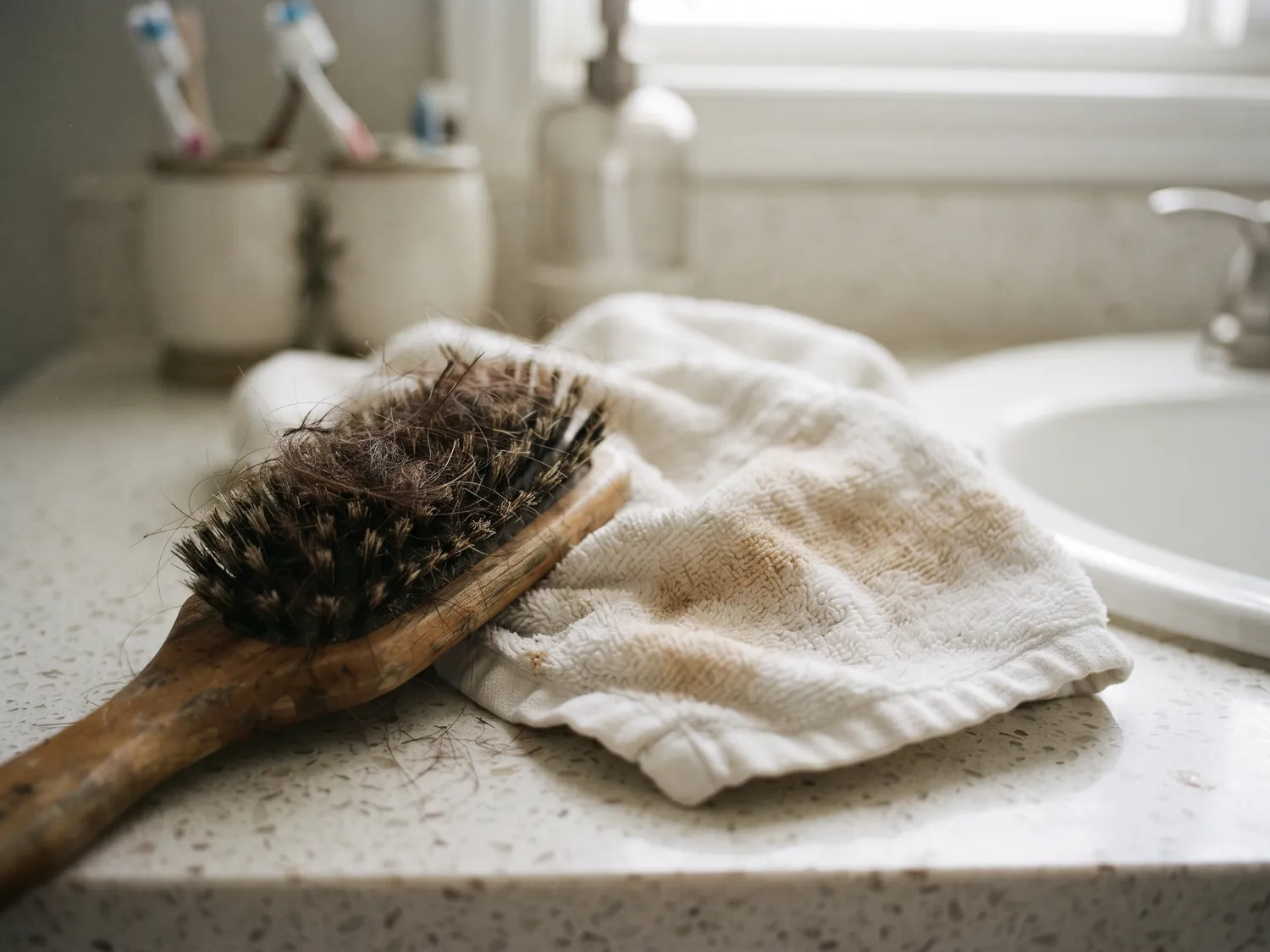
Then there was the hair itself.
It used to be my one vanity. Thick, a little wave in it, the kind people touched. In my late fifties it started to change. Dry at the ends. Rough on top. It snapped when I brushed it.
I would clean my brush and find short broken pieces, not long hairs from the root, just ends that had given up.
The old white towels in our bathroom had brown shadows on them that no bleach would lift. My husband called them "the Peggy towels".
I bought conditioner. Then a better conditioner. Then an oil that cost more than a nice dinner. Nothing changed the feel of it. My hairdresser said, kindly, that color takes its toll over the years.
So there it was. Every few weeks, strong color on the same scalp. Every few weeks, a little more straw. And three nights of scratching to pay for it.
So I Decided to Go Gray
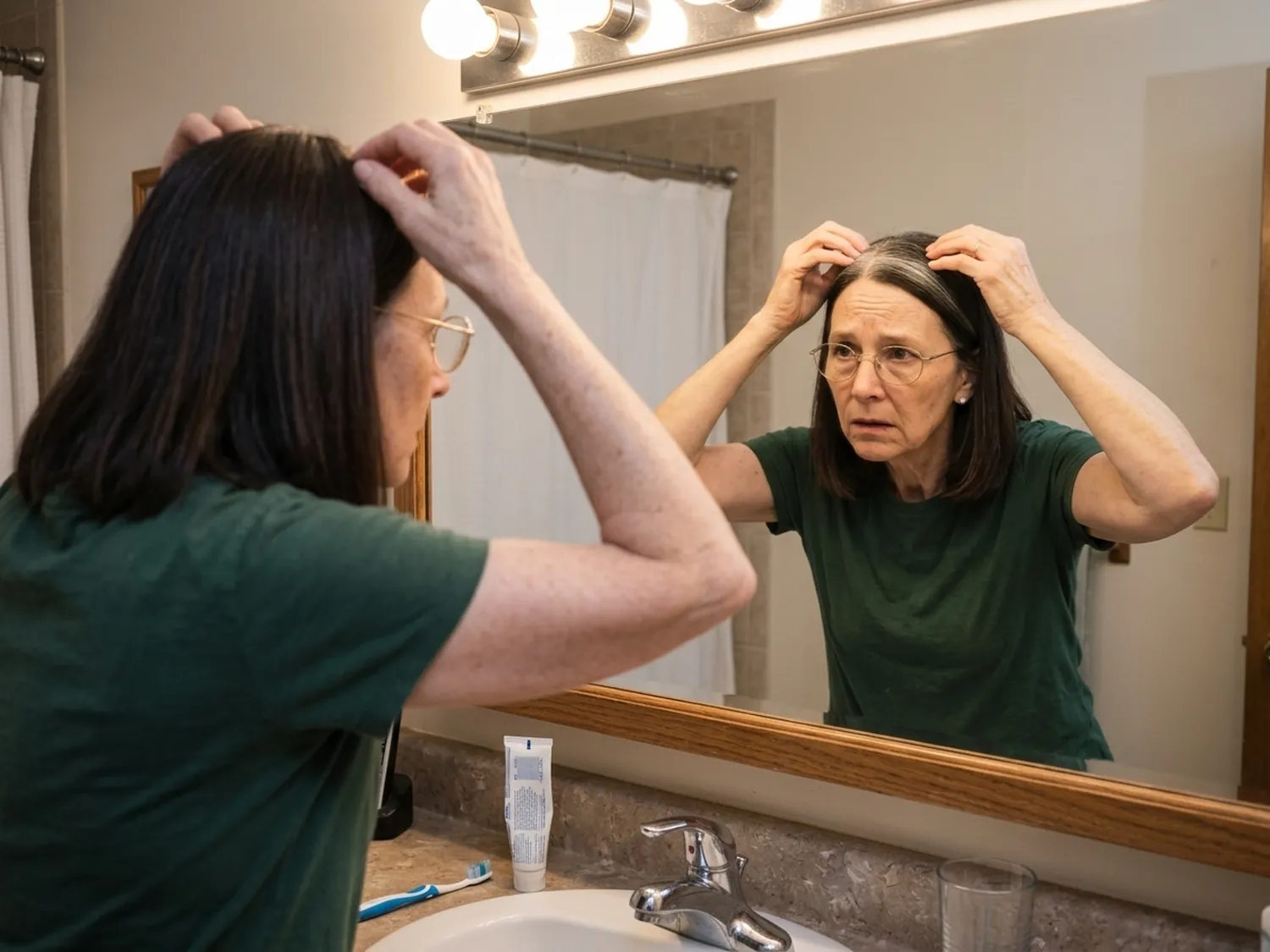
Last November I made a decision. No more color. I would let it grow, the way some of my friends had, and be done with it.
I canceled my Thursday. I felt brave for about a week.
Here is what nobody tells you about growing it out. It does not happen gracefully. Hair grows about half an inch a month, so for a long time you are not a gray-haired woman. You are a brown-haired woman with a white stripe.
At two weeks it was a thin line. At four weeks it was a ribbon. At six weeks it was a road down the middle of my head, bright under the bathroom light.
I started changing my part. Then wearing a headband. Then avoiding the mirror by the front door.
I Hid in the Christmas Photo

At Christmas my daughter lined us all up in front of the tree. Eleven of us, the dog, and my husband in the reindeer sweater he wears to make the children laugh.
When she showed me the photo on her phone, I did not see the children. I saw a tired old woman at the back, with a white line where her part should be.
"Can you take another one?" I asked. "I'll stand behind your dad." She did. I hid. I am not proud of it.
The words people used that winter were small, and they all landed. A friend at church asked if I had been sick. The pharmacist said I looked tired. My husband said nothing, which was worse.
I looked washed out. That is the only way to describe it. Not older and wiser. Just faded, like a photo left in a window.
A White Road in My Hair
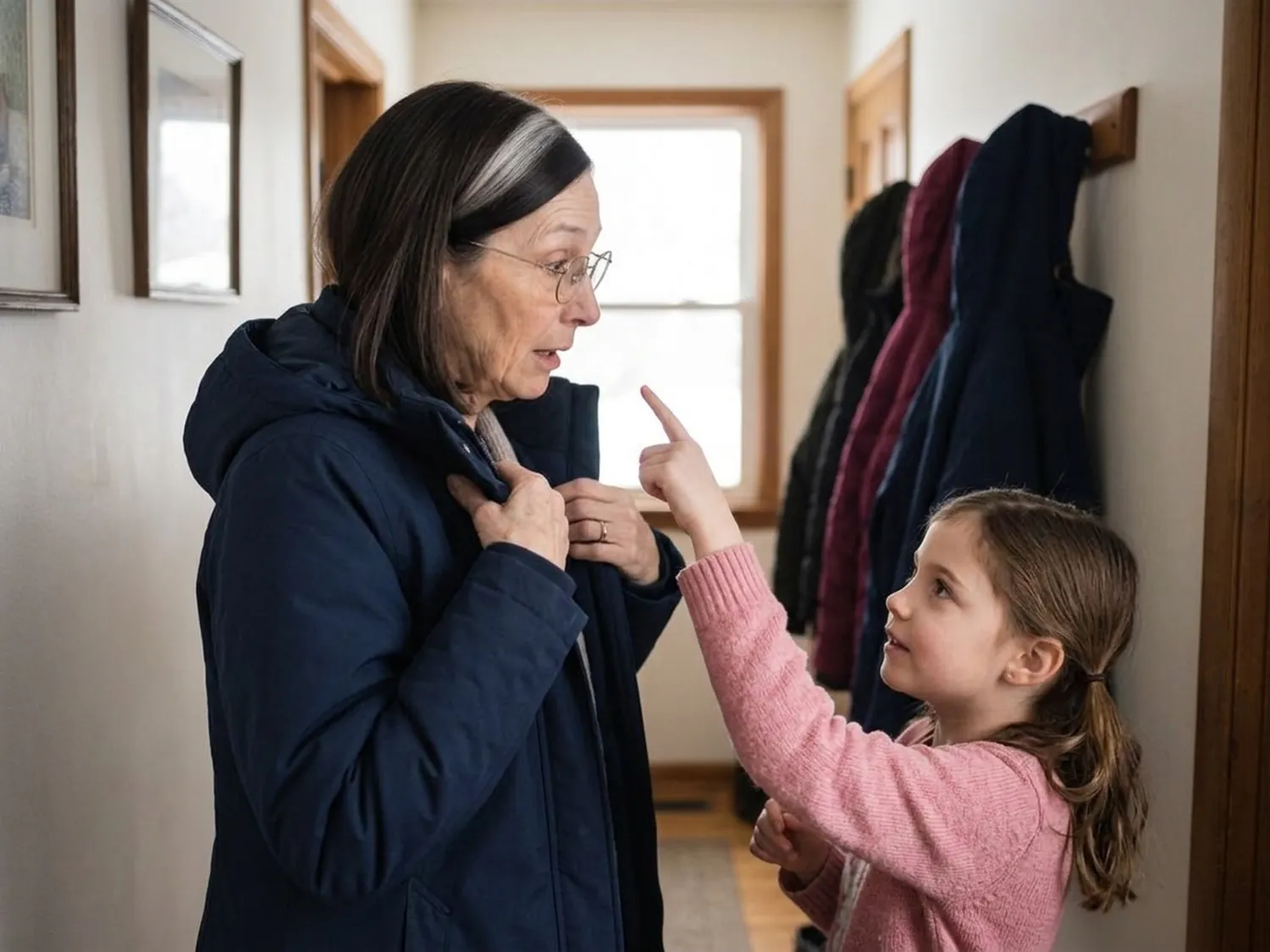
Then came the Sunday in January. Our granddaughter Lily was staying for dinner. At five o'clock, as I was putting my coat on to walk her home, she looked up at me in the hallway mirror.
"Grandma," she said, completely serious, "your hair has a white road in it."
Children say what they see. She was not being unkind. She was seven. But I stood there with one arm in my coat and felt my face go hot.
Because she was right. And because I realized I had been waiting for someone to say it, so I could stop pretending I had made peace with it.
I had not. I was not ready to see a gray-haired woman in that mirror. Not yet. I wanted to look like me. I just did not want to keep hurting to do it.
That night I sat at the kitchen table and wrote down, on a library index card, the two things I wanted. My own color back. And no more strong color every five weeks.
Everything I Tried Next Went Wrong
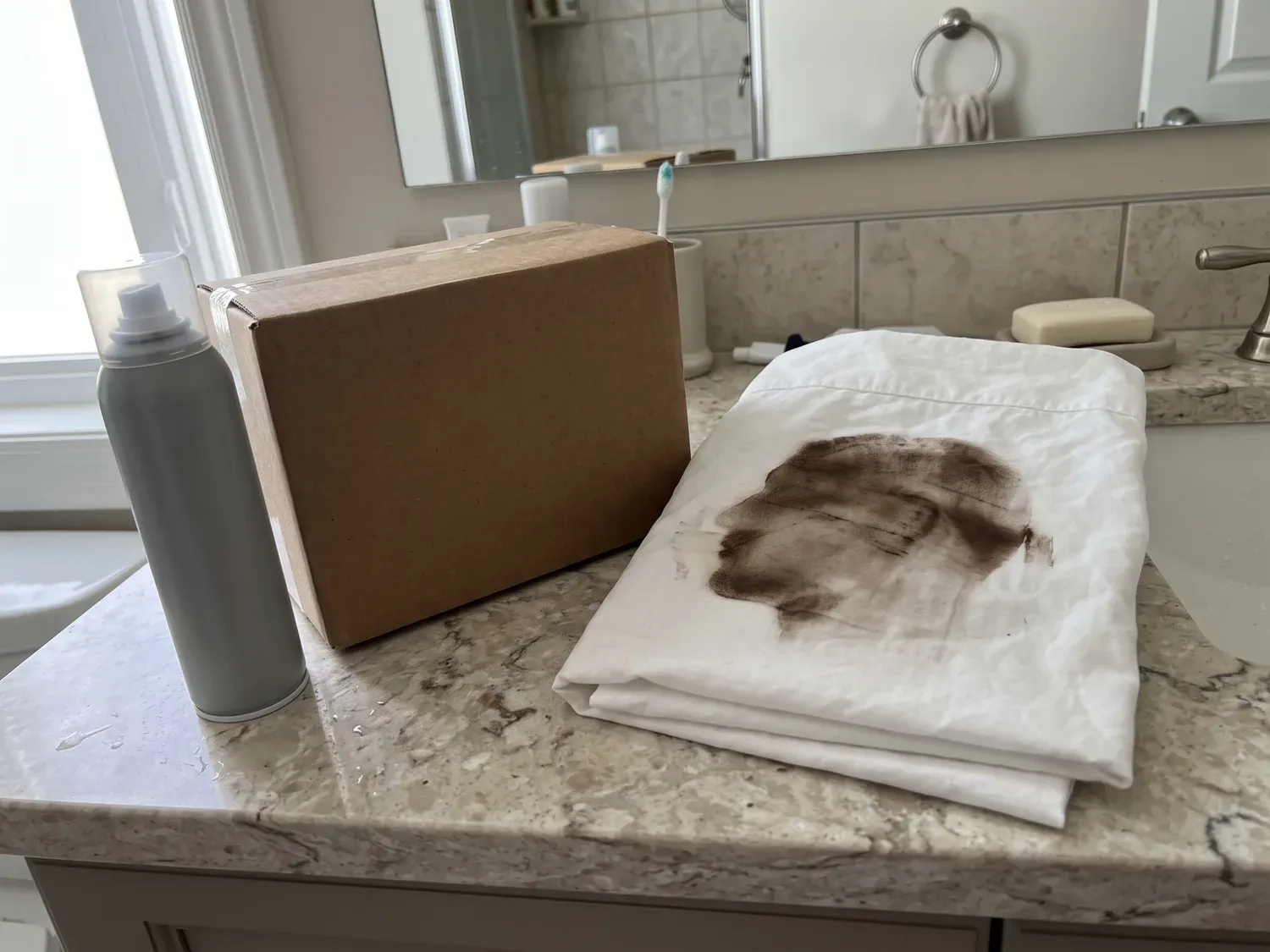
So began what my husband calls my winter of experiments.
First, a box from the drugstore that said "ammonia-free" in big letters. About twelve dollars. I thought gentler meant safe. It still prickled that night, and it came out darker than I have ever been, almost black at the roots.
Next, a root spray. Easy, quick, and it looked fine in the bathroom. Then it rained on the way to church, and I spent the service dabbing brown drops off my collar.
The spray also came off on my pillowcase every night. He said I was leaving a "chalk outline" of my head.
Then a root powder with a little sponge. Fine for an afternoon. Gone by the next morning. Back to the white road every single day.
Each of those cost somewhere between eight and twenty dollars. None of them was expensive on its own. Together they were a drawer full of failures, and I was no closer.
Not Vanity, and Not Your Fault
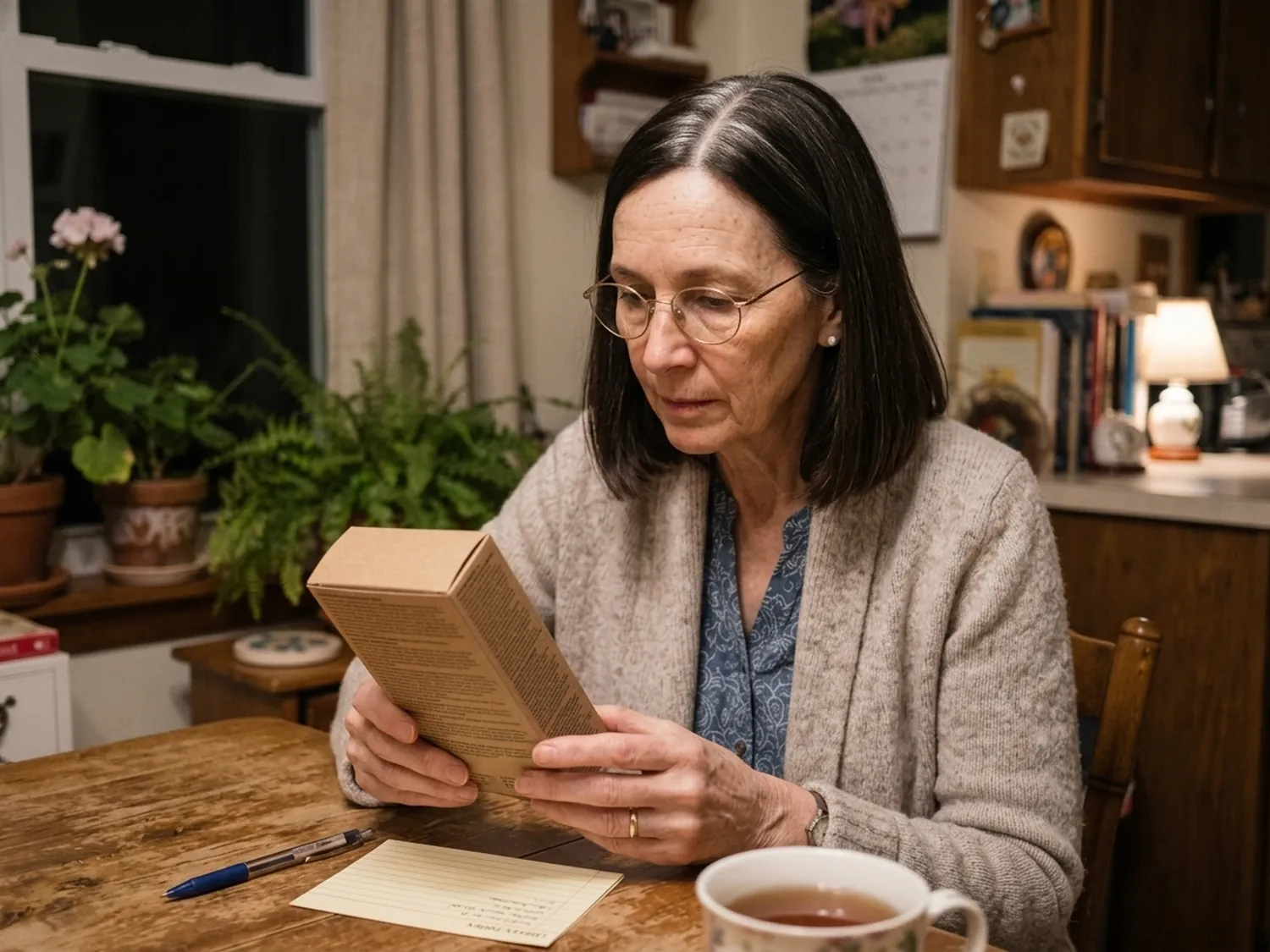
Here is something I wish someone had told me years ago, so I am telling you.
Wanting to look like yourself is not vanity. And if the color you use leaves your scalp unhappy, that is not a failure of yours. You did everything you were told. Every five weeks, on time, for decades.
The problem was never you. It was the way we have all been taught to cover gray. I only understood that once I did what librarians do.
I started reading the fine print.
What Your Labels Don't Say Out Loud
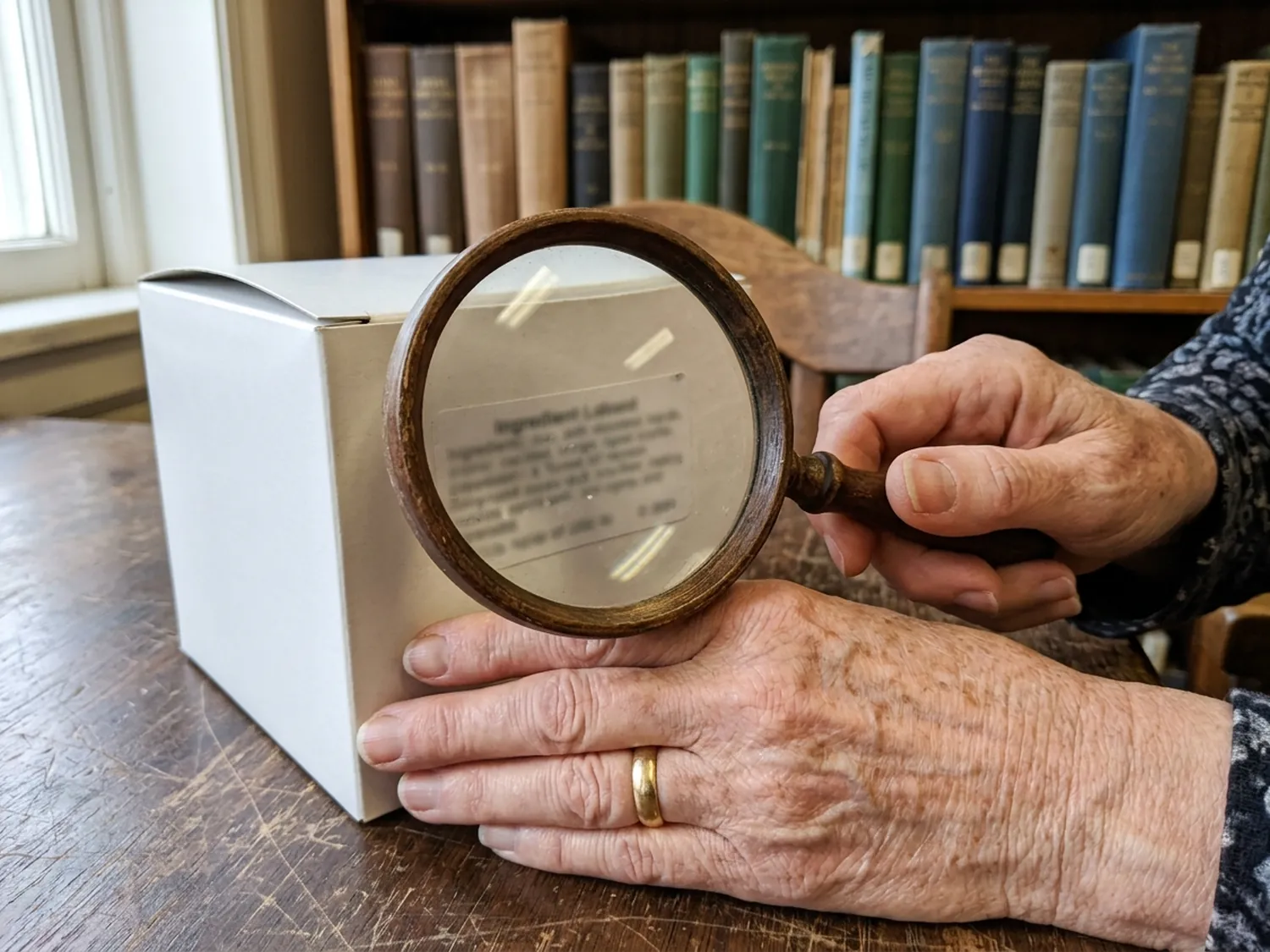
I read the boxes in my drawer. Then I read articles. Then the actual research, at the same library table where I used to help seventh graders with science projects. Two things stopped me.
The first: the ingredient most hair colors use in place of PPD was named Allergen of the Year for 2025 by the American Contact Dermatitis Society. "PPD-free" on a box does not mean a product is free of every possible problem.
The second: a 2025 study found PPD in products that were labeled PPD-free. The words on the front are not always the whole story.
I did not come away frightened. I came away with two simple rules. Read the full label, every time. And always do a skin test before anything new touches your scalp.
The drugstore box in my drawer said the same thing in tiny letters. Test 48 hours before. In thirty-four years, I had never once done it.
Your Real Enemy Is the Calendar
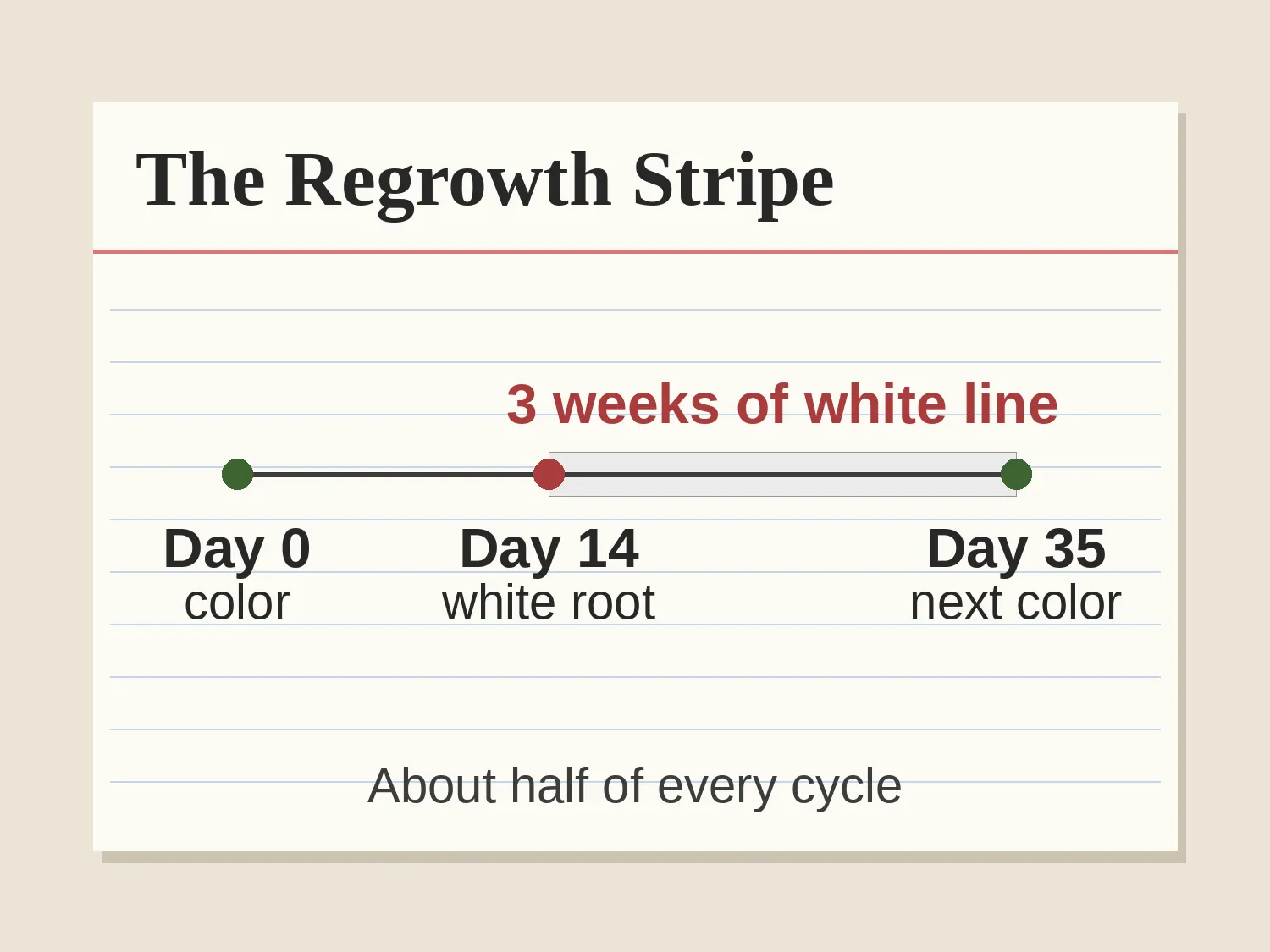
But the labels were only half of it. The bigger thing I found was arithmetic.
Most colorists book gray coverage every four to six weeks. Hair grows about half an inch a month. So the white starts showing two to three weeks after your color. Your next appointment is at five.
I call that gap The Regrowth Stripe. The white line that comes back at your part, weeks before you are allowed to do anything about it.
Think about what that means. For half of every cycle, roughly half the year, the stripe is showing. Not because your color failed. Because the calendar cannot win.
And the only way the old method can close that gap is to color more often, with the same strong color, on the same scalp. Every two or three weeks instead of five.
For me, that was the very thing I could not do. More strong color, more often, meant more nights like those Thursdays.
So I was stuck between two bad choices. Hurt more, or let the stripe win.
A Little Often Beats a Lot Once
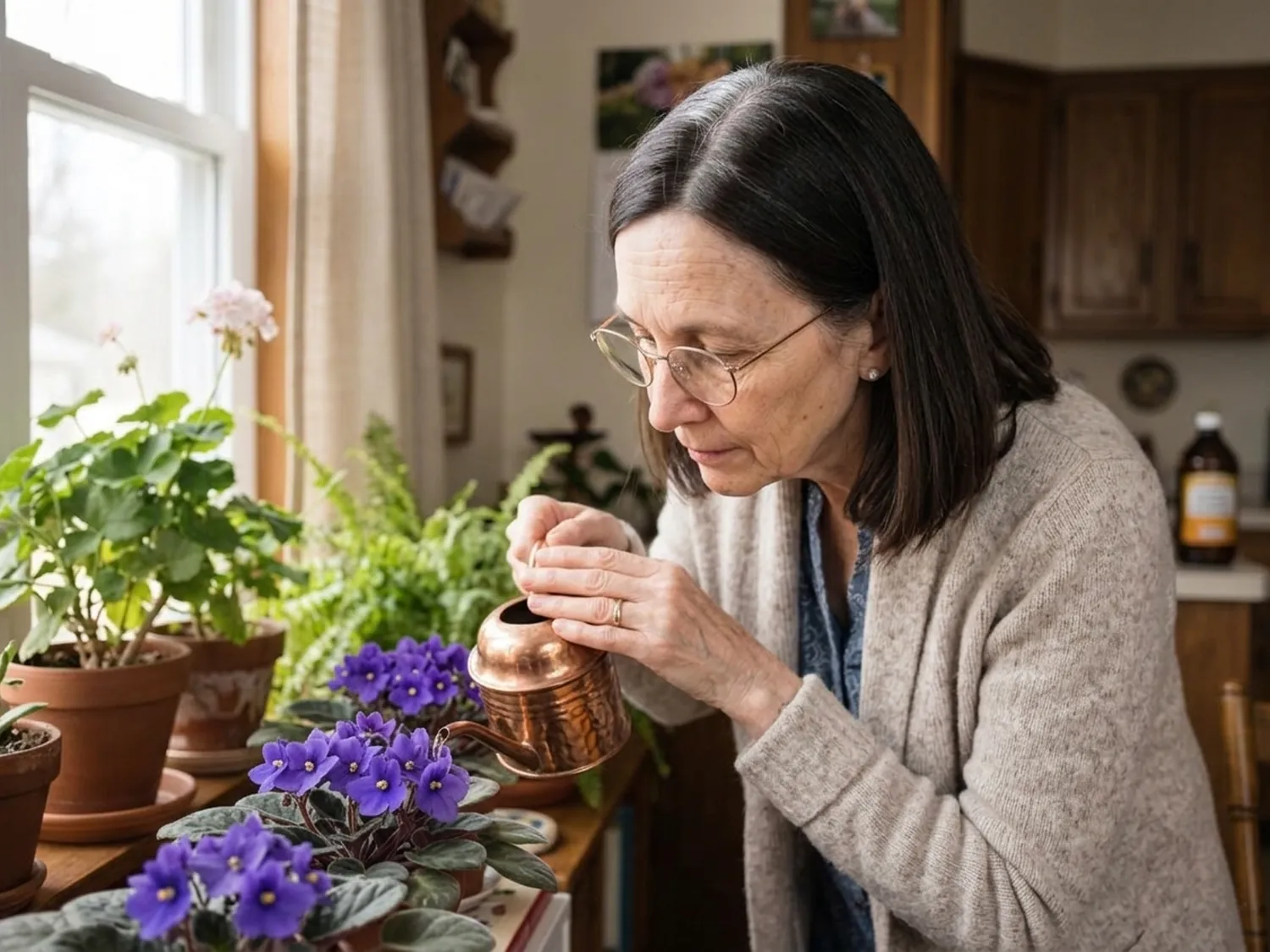
The answer came to me watering my African violets, which is a very librarian way to have an idea.
You do not give a violet a bucket once a month. You drown it, then it dries out. You give it a little, often. It stays even.
What if color worked the same way? Not a strong color every five weeks. A softer color, a little at a time, at home, whenever the root starts to show.
Then the white never gets its two or three weeks. The stripe never forms. No bowl, no brush, no appointment, and no big dose of strong color all at once.
Later I found that the shampoo I ended up using has a name for it: Keep-Up Coverage. A softer color you keep topping up, instead of a strong color you keep starting over.
It made so much sense that I was angry no one had said it to me in thirty-four years. But I still needed something that could actually do it. Something without ammonia, without PPD, and simple enough for a Tuesday morning.
The Bottle I Almost Didn't Try
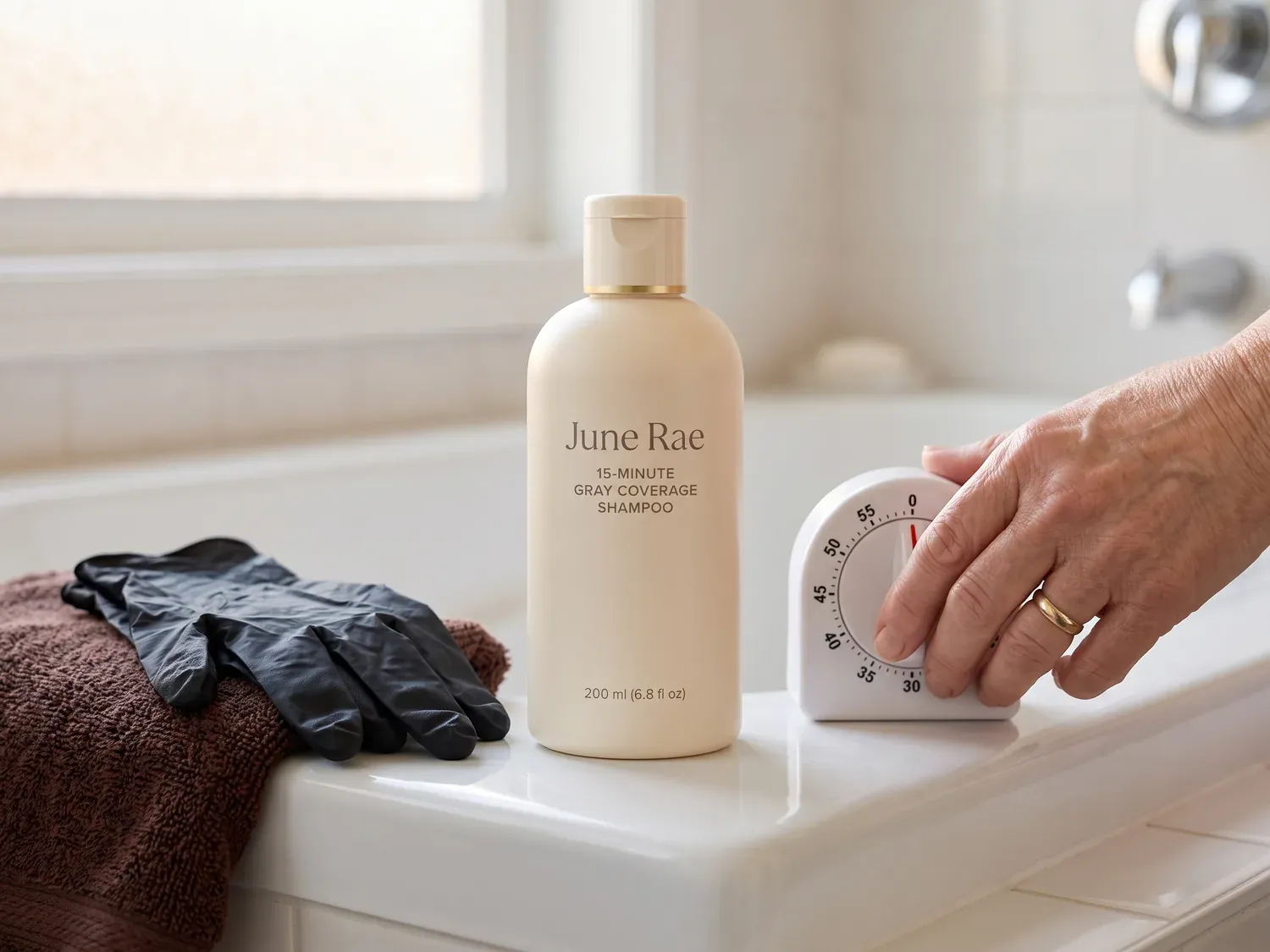
My daughter-in-law found it. She had read my index card, which I had left on the fridge, and sent me a link with one line: "This is your card."
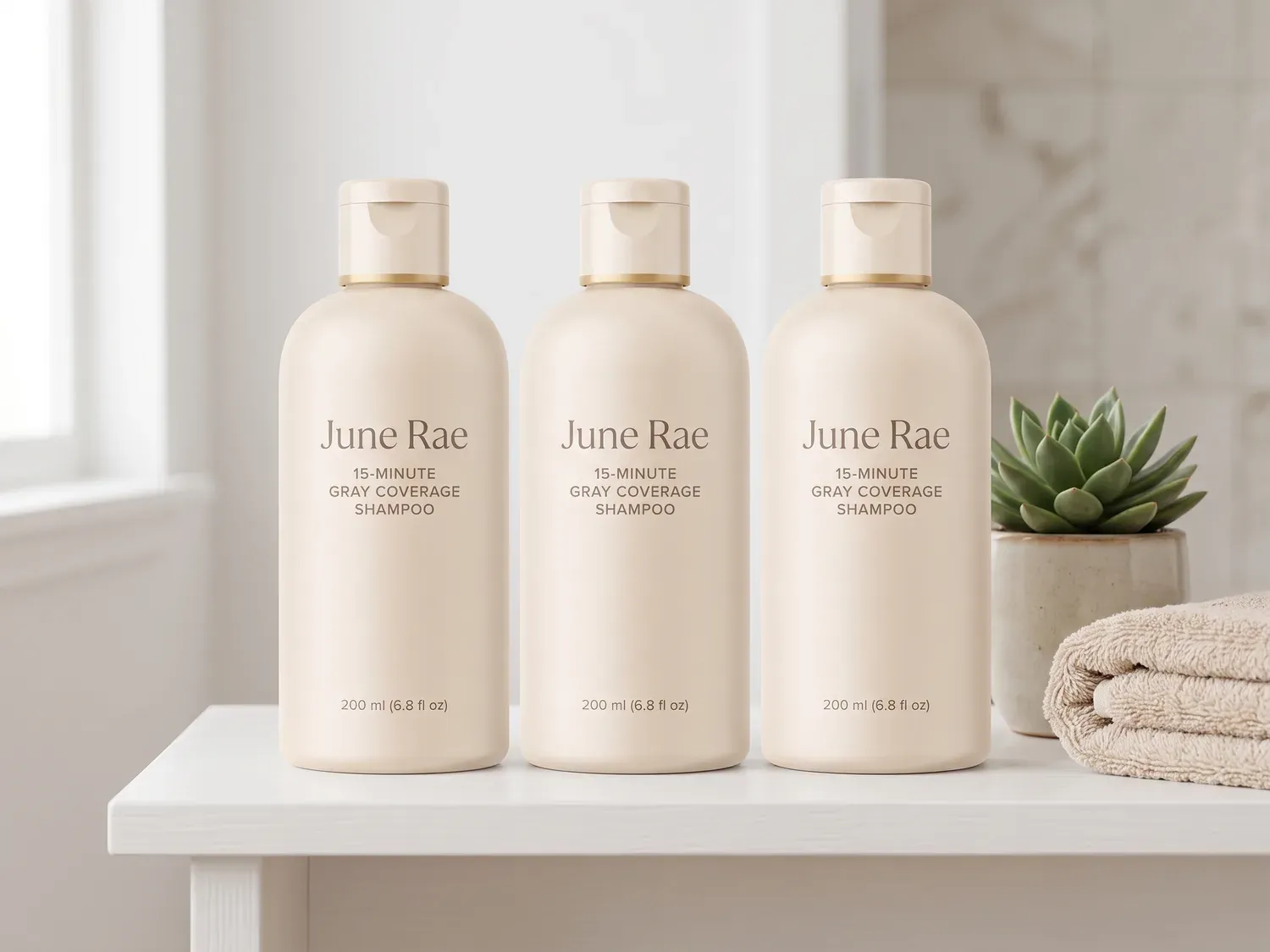
It was called the June Rae 15-Minute Gray Coverage Shampoo. It was $39.90 a bottle.
My husband read the price over my shoulder and said, "Forty dollars for shampoo?" I reminded him what he had paid for his last fishing reel. We will come back to the price.
What caught me was not the price. It was the label. It said no ammonia and no PPD. No two tubes to mix. Three shades: Black, Dark Brown and Light Brown.
So I asked my usual librarian question: what is in it, and what is not? What is not in it: no ammonia, no PPD, no second tube to mix. What is in it: a color that goes on like a shampoo and builds a little each time, instead of one strong dose.
The full ingredient list is printed on the bottle. I read every line of it at the kitchen table, the same way I had read the boxes in my drawer. And then I did the one thing no label can do for you.
And, for the first time in my life, a color product told me the truth on the front page. Wear gloves. Do the skin test 48 hours before. Expect the first two weeks to take two or three applications, not one.
Every other product I had tried had promised everything on day one. This one told me what would not be perfect. That is exactly why I trusted it.
First, the Test I Had Always Skipped
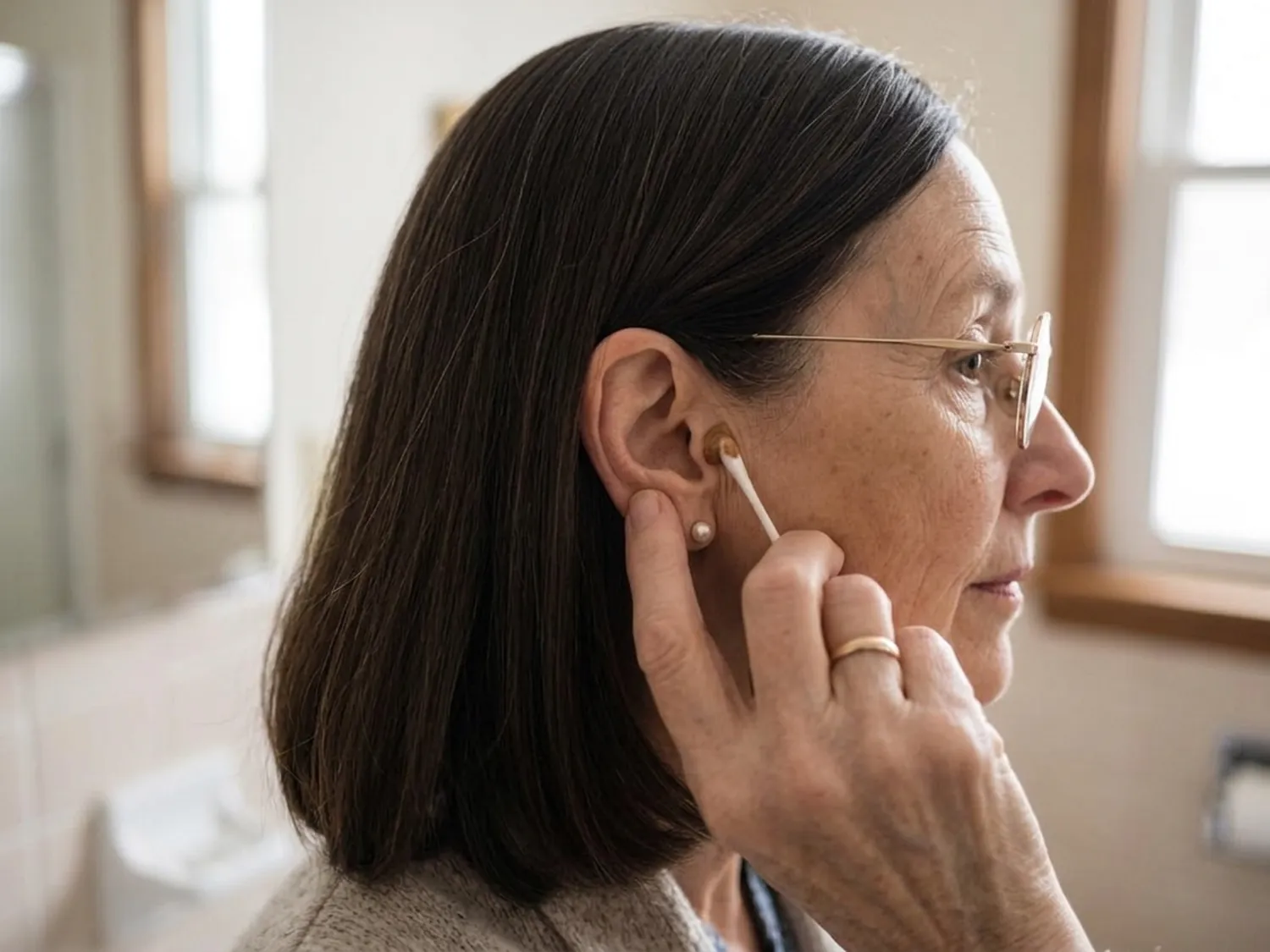
Before anything else, I did the 48-hour test. Properly, for once.
A small dab behind my left ear, on a Monday night. I set an alarm on my phone so I would not forget to check it Wednesday.
I am telling you this part on purpose. If you are like me, you will want to skip it. Please do not. "No ammonia, no PPD" is true of this bottle. It does not mean nobody can react. Nothing can promise that.
Wednesday came. No redness, nothing at all. If there had been, I would have stopped right there and sent it back.
The instructions also say not to use it on a scalp that is irritated or broken. So I waited until my skin was calm. That was easy now. I had not used anything strong in weeks.
Day One Was Not Perfect
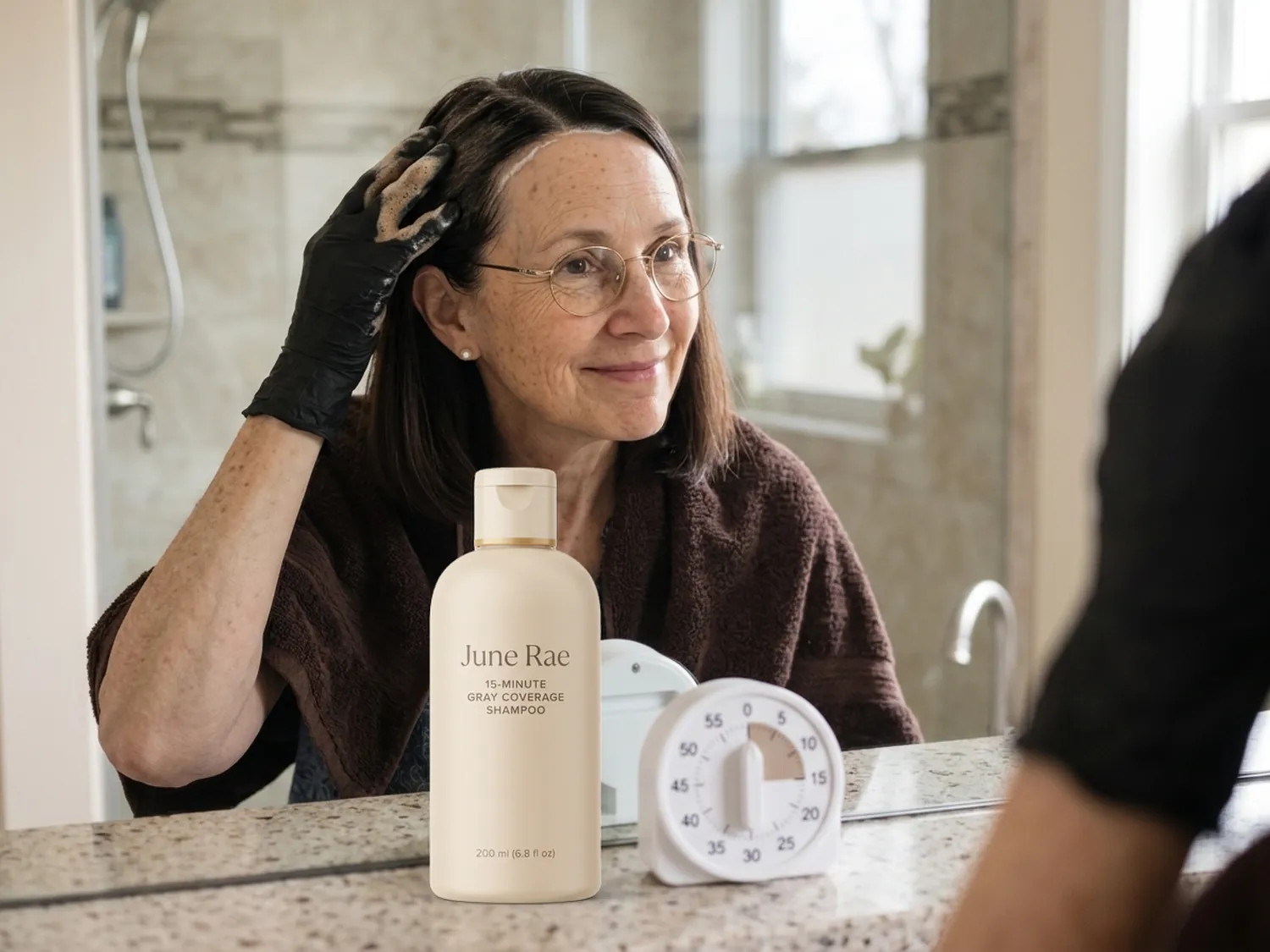
The first application was a Thursday. I chose it on purpose. Old Thursdays, new routine.
I picked Dark Brown, the shade my hair was before the gray came in. That is the rule they give, and it is the right one.
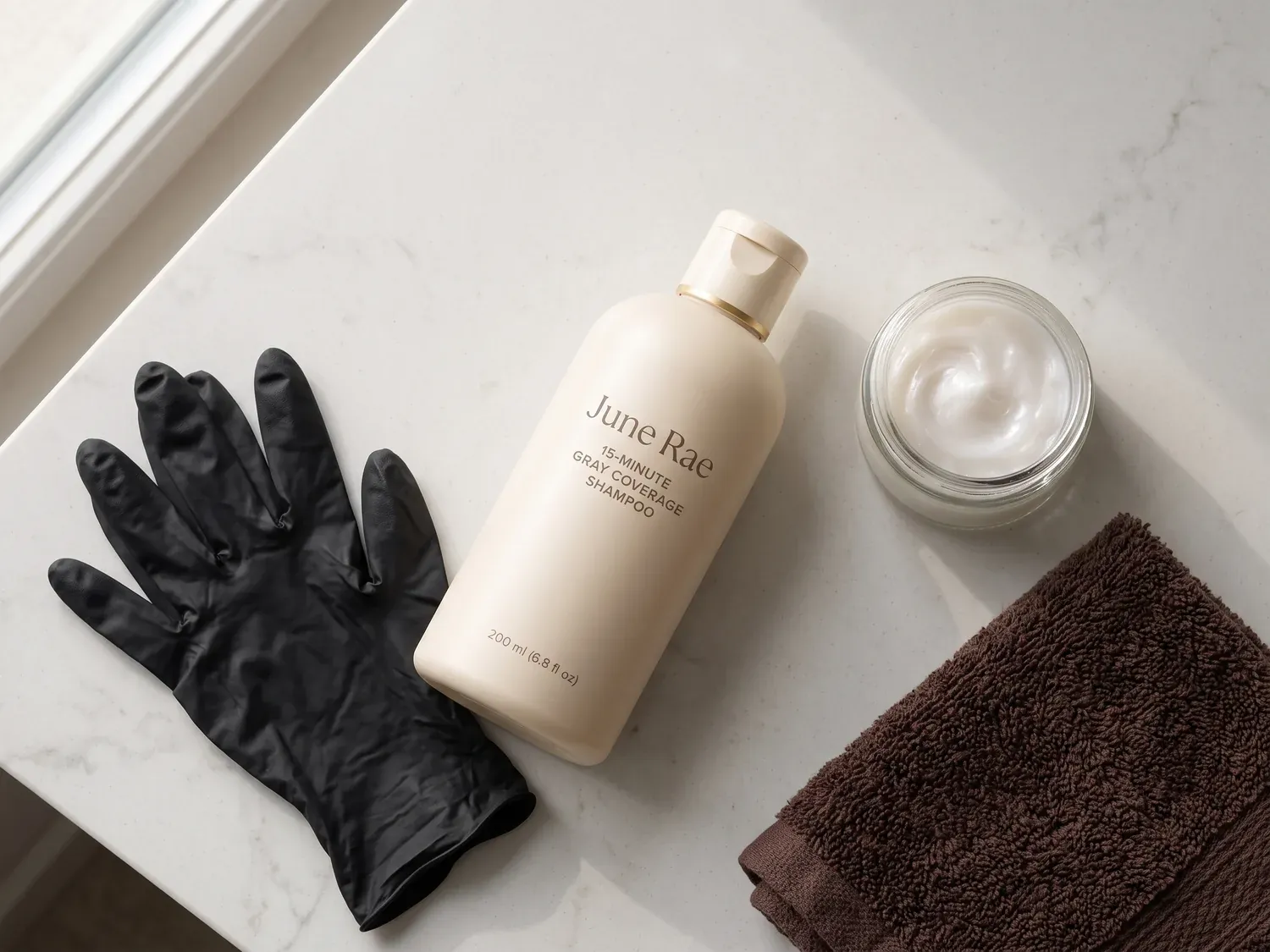
I followed the three steps. Gloves on, a little rich cream along my forehead and ears, hair dry. Then the shampoo, starting at the temples and the part, worked down to the ends.
I set the kitchen timer. Because my temples are nearly pure white, I let it sit a full twenty-five minutes, which they say is fine for the first applications on very white hair.
Then I rinsed until the water ran clear, used a dark towel, and wiped one smudge off my ear within five minutes. It came straight off.
And the result? Better, but not perfect. The part looked like mine again. The temples came out a little warm, almost chestnut, where the hair was whitest.
I will be honest. My heart sank for a minute. Then I reread the label: on very white temples the first application can come out warmer, and the second evens it out.
That night, I went to bed and waited for the itch. I lay there for a long time, waiting.
It did not come. Not that night, and not the next. I know everyone's skin is different. But for me, that was the moment I started to cry a little.
Then the Stripe Was Simply Gone
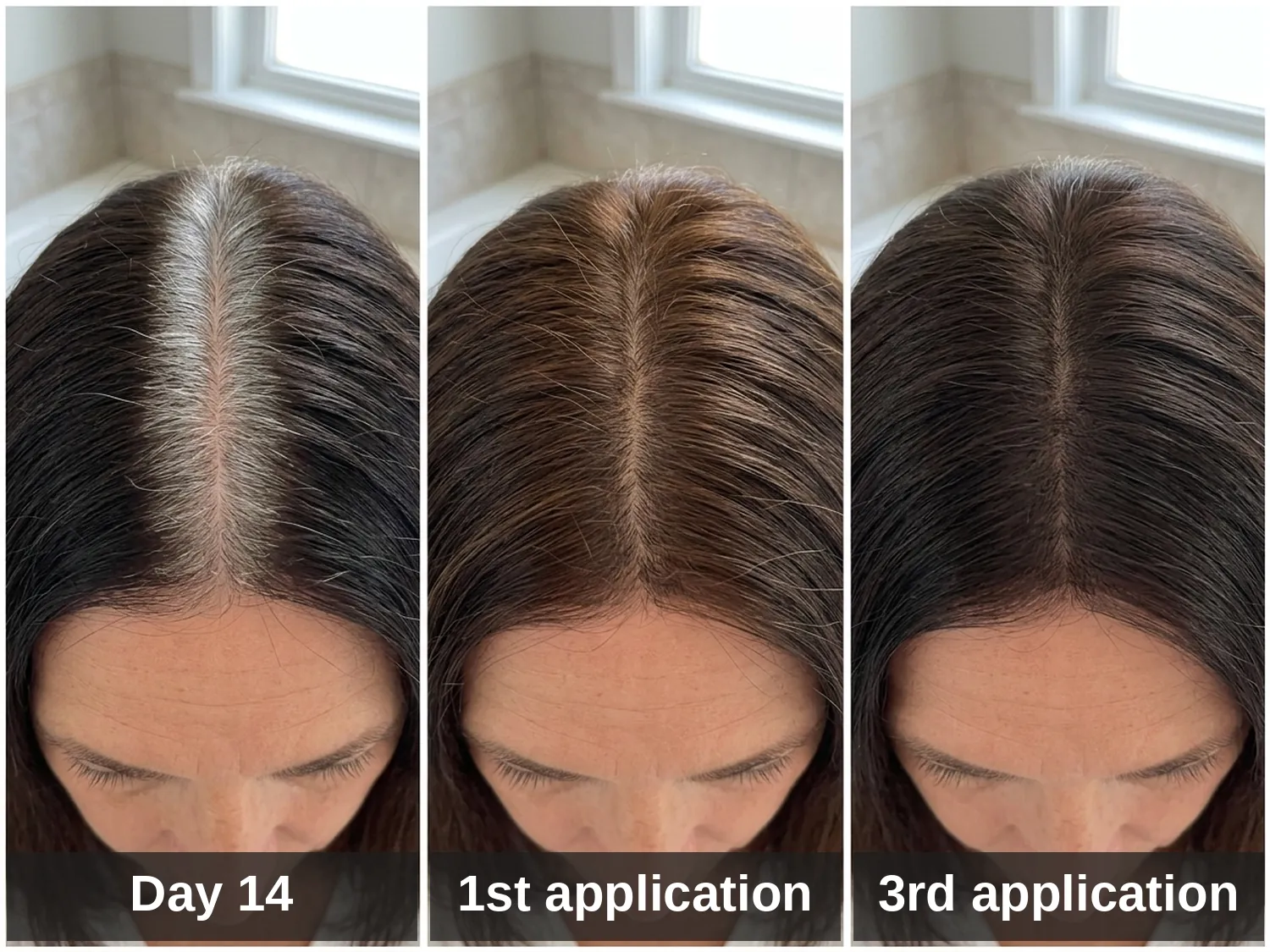
Day four, I did the second application. Twenty-five minutes again on the temples. This time the warm tone settled into the same brown as the rest.
Day nine, the third. After that, it simply looked like my hair. Not a helmet of color. Not a box-dye black. The brown I had at forty.
From the third week on, I went to the routine they suggest: fifteen minutes, about once a week, on the morning the root starts to peek. Usually a Thursday, out of habit.
Fifteen minutes is one cup of coffee and the crossword. That is the whole appointment now.
My ends were still my ends. That spring I had my hairdresser take off an inch of the driest part. What changed is simple: no more strong color going onto them every five weeks.
In March we drove to see my sister in Ohio and I forgot the bottle. Two weeks without it. I braced myself for the white road.
It never came back as a stripe. The color simply softened, little by little, with no hard line. When I got home, one wash put it right.
That was when I understood Keep-Up Coverage for real. There is no stripe because there is never a gap long enough for one to form.
The Baptism Photo, and What He Said

In April our new grandson was baptized. After the service, my daughter lined us all up again on the church steps.
This time I did not stand behind my husband. I stood in the front row, holding the baby, because my daughter asked me to and because, for the first time in a long time, I wanted to.
That photo is on our fridge now, right where my index card used to be. I am smiling with my whole face. I look like me.
My granddaughter studied my head very seriously during the reception, then announced, "The road is gone." Everyone laughed. I laughed hardest.
My husband waited until we were in the car. "You look rested, Peg," he said. "You look like you used to look." Then he asked if I wanted to stop for ice cream, which is how he says the important things.
Here's What It Does for You, in Short
If you skipped down here, this is the part to read.
The problem: The Regrowth Stripe. Hair grows about half an inch a month, so the white shows two to three weeks after your color, while the next strong color is weeks away.
The fix: Keep-Up Coverage. A softer color, applied at home in 15 minutes, a little at a time, whenever the root starts to show. The stripe never gets its two or three weeks.
What is in it, and what is not: a color that goes on like a shampoo and builds a little each time. No ammonia, no PPD, nothing to mix. The full ingredient list is on the bottle. Three shades: Black, Dark Brown, Light Brown. Pick the shade your hair was before the gray came in.
How it builds: visible from the first application, more even after two or three. For the first two weeks, plan on two or three applications, up to 25 minutes on very white temples. Then 15 minutes, about once a week.
How long it lasts: the color fades softly over two to four weeks, with no hard line.
How much you get: 10 to 15 applications per bottle on short to mid-length hair, fewer on long, thick hair.
The honest part: wear gloves, protect your hairline with a rich cream, use a dark towel, wipe any mark off your skin within five minutes, and do the skin test 48 hours before your first use.
What $39.90 Really Costs You
Now, the price. My husband's "forty dollars for shampoo".
Let's put it next to what I was already paying. A salon color for gray coverage runs anywhere from $60 to $250 a visit, every four to six weeks. Add up a year of that and it is more than a lot of people's car payment.
Then there was my drawer of sprays, powders and boxes. Eight to twenty dollars each, none of which did the job.
One bottle of June Rae is $39.90, for 10 to 15 applications. That is under $5 per application, about $2.66 to $3.99 a time.
Because Keep-Up Coverage means using it about once a week, there is also a set of 3 bottles for $79. That is what I order now. One bottle covers the first two weeks and about ten weekly top-ups after that; three bottles mean I do not have to think about it for months.
1 bottle
$39.90
Under $5 per application
10 to 15 applications. Your first two weeks, then about ten weekly top-ups.
3 bottles
$79
$26.33 a bottle
$1.76 to $2.63 per application. Months of weekly top-ups.
Nothing is preselected: you choose one bottle or three. No subscription. You are charged once.
- 30 days, even if the bottle is used
- One email, nothing to send back
- No subscription
Ships within 1-2 business days, delivered in 5 to 9 business days in the US, tracked.
Thirty Days, Even If the Bottle Is Used

This is the part that finally made me press the button, so I want to give it room.
June Rae gives you 30 days. Not 30 days if the bottle is sealed. 30 days, even if the bottle is used. Even if it is empty.
So you can do exactly what I did. The skin test. The first application. The second. Your hardest spot, the whitest temple, the part under the bathroom light.
If it does not do what you hoped, you send one email to their customer service. That is it. Nothing to send back, no half-used bottle in the mail. You do not argue with anyone.
After my winter of experiments, I can tell you what that means. Every one of those boxes and sprays was money I never saw again. This one is the only thing I have bought where the risk was not mine.
The only thing you are really risking is one more month of the white road. And you would have that anyway.
Try It for 30 DaysBefore You Order, Read These Answers

These are the questions my friends asked me, in the order they asked them.
Isn't this just more chemicals on my scalp?
It is still a hair color, so yes, it has ingredients that color. What is different is no ammonia, no PPD, and a softer color applied little and often instead of a strong color every few weeks.
What if I react to it?
That is why the 48-hour skin test is not optional. Behind the ear or inside the elbow, before your first use. If anything appears, do not use it. Never use it on an irritated or broken scalp.
Can a shampoo really cover white hair?
It covers by building up. You will see color from the first application, and it evens out after two or three. On very white temples, leave it up to 25 minutes for those first applications.
Will it turn orange?
Choose the shade your hair was before the gray. On very white temples the first application can come out warmer. The second evens it out. That is exactly what happened to me.
Will it stain?
It is real color, so yes, it can. Wear gloves, put a rich cream along your hairline and ears, use a dark towel, and wipe any mark off your skin within five minutes.
How long does it last?
It fades softly over two to four weeks, with no hard line. Most women top it up once a week, in 15 minutes, when the root starts to show.
How many washes are in a bottle?
10 to 15 applications on short to mid-length hair. Fewer on long, thick hair. I would rather you know that now.
What if it simply doesn't work for me?
You have 30 days, even if the bottle is used. One email, nothing to send back.
How fast does it arrive?
It ships within 1-2 business days and is delivered in 5 to 9 business days in the US, tracked.
You Have Two Choices Now

Choice one is the one I lived for six years. The strong color every few weeks. The three nights of scratching. The white road between appointments. Or giving up and letting it grow out, before you are ready.
Choice two is fifteen minutes on a Thursday morning, a skin test first, two or three careful applications to start, and 30 days to change your mind.
If you color now, the easiest day to start is between day 7 and day 10 after your last color, before the stripe has had time to show.
I am not going to tell you which one to choose. I am only going to tell you that the stripe will be back in two or three weeks either way. The question is what you do when it shows up.
Choose Your Shade of June RaeNotes From Women Who Felt the Same

When I told my book club, three of them tried it. These are notes from women like us, my friends among them.
"I was the one who said 'a shampoo can't cover white.' It took me three goes on my temples, just like the instructions said. Now I do it Sunday mornings and nobody can tell."
"I did the skin test first because the bottle told me to, which no other product ever has. And I like that it washes in like a shampoo. No bowl, no brush, no smell in my sweater."
"The first time my temples came out a bit coppery and I almost gave up. The second wash fixed it. Four stars because I wish I had read the 25-minute tip before I started."
"It does stain if you are careless, so wear the gloves. But fifteen minutes a week instead of a whole morning in a chair? I am never going back."
"I did my fifteen minutes the morning of my son's wedding. In the photos I just look like me. That was all I wanted."
None of us are models. We are women who wanted to look like ourselves without the strong color every five weeks.
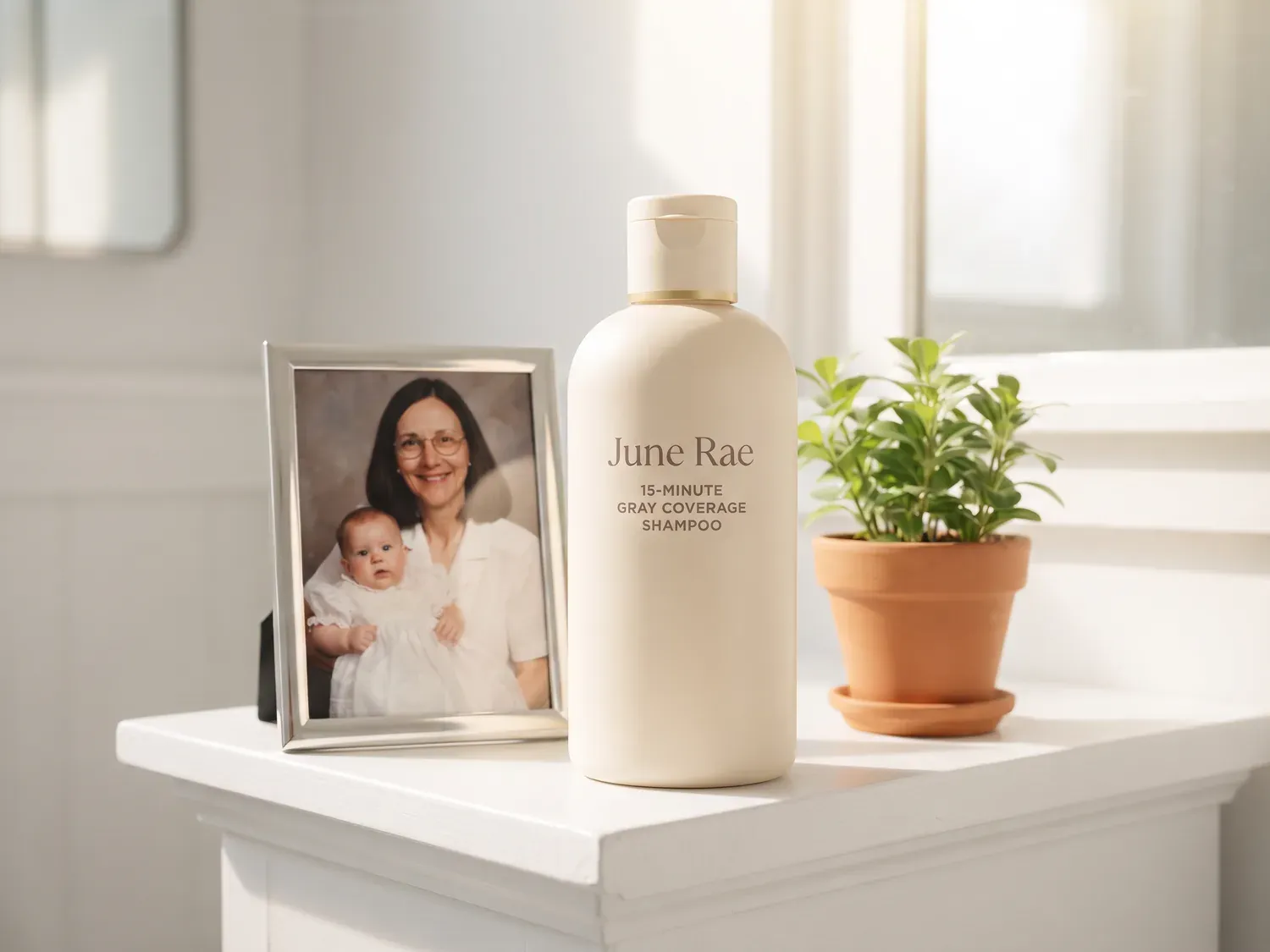
I Look Like Myself Again
No ammonia, no PPD, 15 minutes a week, and 30 days to decide, even if the bottle is used.
Choose Your ShadeP.S. Last Thursday I did my fifteen minutes, then took my granddaughter to the library where I used to work. The new librarian said, "Peggy, you haven't changed a bit." I said thank you, and I meant it.
P.P.S. Whatever you choose, please do the 48-hour test first, with this or with anything else. It is the one thing I wish I had done thirty-four years ago.